


This piece is being cross-posted with Tal Roded of NYCuriosity.
It takes sunlight about eight minutes to travel from its point of origin to Earth. And when we observe other galaxies through telescopes, we are actually intercepting light that has been traveling for a much longer time. The Andromeda Galaxy, our nearest major, spiral galaxy neighbor, is 2.5 million light-years away. When we look at it in a telescope, we are looking into the past; the light of the present Andromeda Galaxy will reach us in the far distant future.
One can find an analogy here in political and civic processes, which I’ll call the political starlight phenomenon: by the time the public hears about something, its fate has long since been decided.
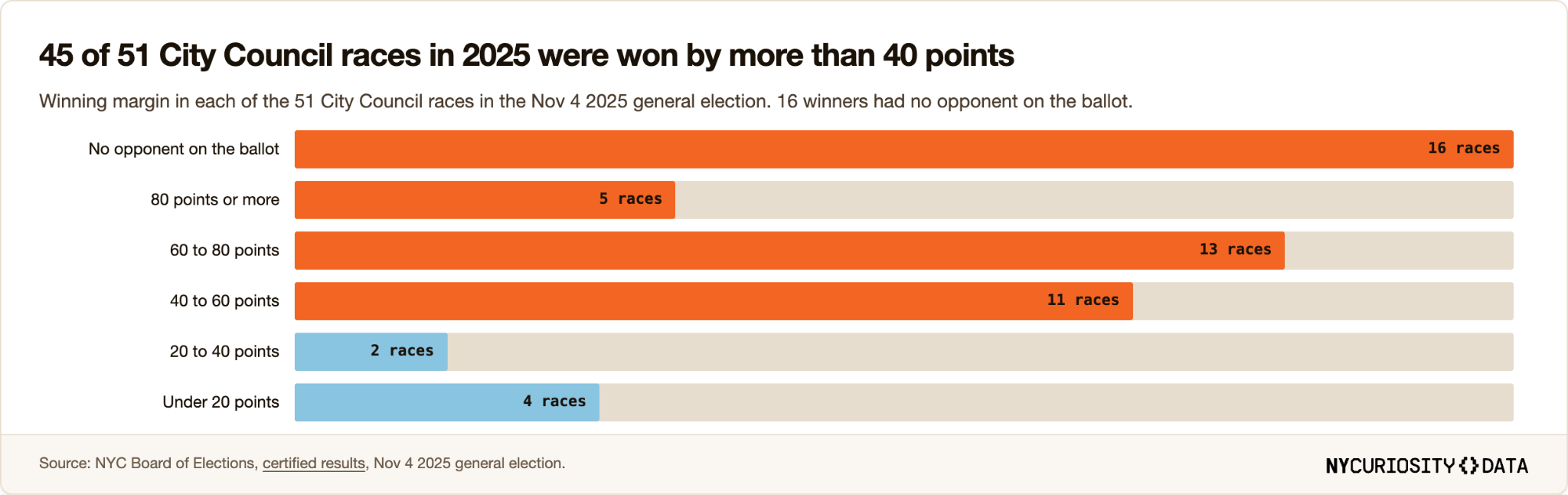
For example: most general elections in New York City are not competitive (and many primaries are not either). If a voter wants to show up on election day in November and have an impact, they likely won’t be able to have one. If they wanted to have an impact, they would have needed to start long before election day. They probably would need to have hosted fundraisers, gotten involved in party politics, and more.
General elections in New York City, for most races, are old starlight. They reflect a process that took place in the past, and by the time most voters see it, there’s nothing to do but absorb the light.
The old starlight of public awareness
But the starlight phenomenon is not limited to elections. By the time an issue or idea enters the Overton window, or just becomes more widely known about, it has likely been around for a long time. Public awareness is a kind of lagging indicator.
For example: by the time the average person hears about a bill being voted on, whether in the City Council, State Legislature, or Congress, it is probably too late to impact the result very much, if at all. The meat of the bill was worked out long ago, and most legislators already know how they will be voting.
Advocacy that only starts at the point of a final vote or when a bill receives media attention is late and less effective. Of course, there can be exceptions to this process where late entry still gets strong results, particularly when the policy at hand is controversial or the bill goes viral and the flood of attention changes minds.
But relying on a story catching the national spotlight or changing the minds of enough electeds in the final stage of the process is a poor strategy. Policy advocates who want a consistent and reliable effect on outcomes need to be involved in the policy process at its source.
That process involves webs of think tanks, influencers, elected officials and their staff, interest groups, the media, and more; this is one reason for you, dear reader, to write down your policy ideas on the internet and join the posting-to-policy pipeline. Big policy ideas are often discussed for years, or decades, before they come to fruition; these discussions create path dependencies that influence the shape of successive Overton windows.
Opportunity must meet preparation
One important reason to join the policy, culture, and politics fray is to make sure that your ideas are known and worked out when an opportunity opens for them to be considered. Policy and political actors do not do an open casting call for ideas when policy windows open (although good ones do this to prepare for such moments). They look around at what has been worked out up until that point, pull things from that list, and go from there. They usually do not start from completely new proposals that are from completely new entrants into the policymaking process.
In other words: you go to war with the army you have.
The idea that both favorable macro circumstances and good ideas need to happen at the same time (meaning the good ideas need to have been worked out in advance) is as old as modern democratic governance.1
In 1845, J.S. Mill wrote in “The Claims of Labour”:
Ideas, unless outward circumstances conspire with them, have in general no very rapid or immediate efficacy in human affairs; and the most favourable outward circumstances may pass by, or remain inoperative, for want of ideas suitable to the conjuncture. But when the right circumstances and the right ideas meet, the effect is seldom slow in manifesting itself.2
Earlier in that essay, he explained that the contemporary reform movement of 1845 could trace its origins to Robert Malthus’ “An Essay on the Principle of Population” from 1798:
But if the permanent place now occupied in the minds of thinking men by the question of improving the condition of the labouring classes, may be dated from the new light cast by Malthus’s speculations upon the determining laws of that condition…3
For more modern examples, you can read things like this Statecraft interview on the ROAD to Housing Act at the federal level, particularly this section.
The community board example: resolutions
For a more local example, we can look at community boards. These are the most local level of governance in New York City and arguably the most accessible to actors not “inside” the political system themselves.
Community boards hold monthly full board meetings where they vote on a slate of resolutions; these are soft-power official statements that carry no enforcement power, but they have plenty of influence on those who do have such powers. They cover everything from land use decisions and street changes to approvals for sidewalk cafes and liquor licenses. By the time the full board vote is held on a resolution, the following has already happened:
An interested party (the City agency advancing a project/policy, an advocacy group, a community board member themselves) has presented at a committee meeting for that community board.
A resolution has been drafted, perhaps debated and had its wording changed or its focus shifted, and voted on by the committee.
The full board has received the resolution and likely discussed prior to the meeting how to vote on it with fellow board members, community partners, and trusted advocates and friends.
Prior to even that first step of a committee meeting, the policy matter the resolution is addressing may have been discussed between the committee chair and the interested parties. It is not unusual for a chair to have coordinated in advance with such interested parties to have pre-drafted the resolution and determined the exact wording.
It is straightforward enough for an interested member of the public to get involved in these processes; they can join their community board, they can follow someone who writes about their community board, or they can set an AI agent to ping them when issues are first talked about on social media, community board transcripts, or hyper-local media. Of course, the government itself could also do a much better job of making community board activity accessible to the public by doing things like ensuring timely publication of meeting minutes and transcripts.
Regardless: the process usually isn’t a smoke-filled back room (those exist, but they’re often the exception, rather than the rule, in our politics), and there are plenty of opportunities to get involved. Sometimes a member of the public will get mad when they realize they’re finding out about an issue relatively late in its decision-making process. And while that sometimes means someone didn’t do their job (the media didn’t report it, the government didn’t do outreach, etc), the most common explanation is that the member of the public exerted inadequate effort to be informed, despite many people and social media trying to inform them.
To sharpen the point: “I would like to show up at the last second and have my opinion carry the day, and defeat the opinions of the people and institutions who’ve been actively working on this for a while” is an unreasonable expectation, even if one is in the right. And this manner of proceeding wouldn’t even work in our current governmental system. Imagine waiting to discuss a community board resolution until it is before the full board of 50 people with members of the public there to offer opinions. It would be the worst version of “government by committee,” and anyone who has seen an issue get raised for the first time at a full board meeting knows that is the default result.
The reasonable expectation is to show up, explain your view, and maintain a presence as an issue evolves. You can do this by yourself, with friends, or as part of a larger group.
City Council votes as old starlight
The starlight phenomenon holds for any body that operates like a standard deliberative assembly in the American system. At the city level, that means community boards, but it also means our City Council.
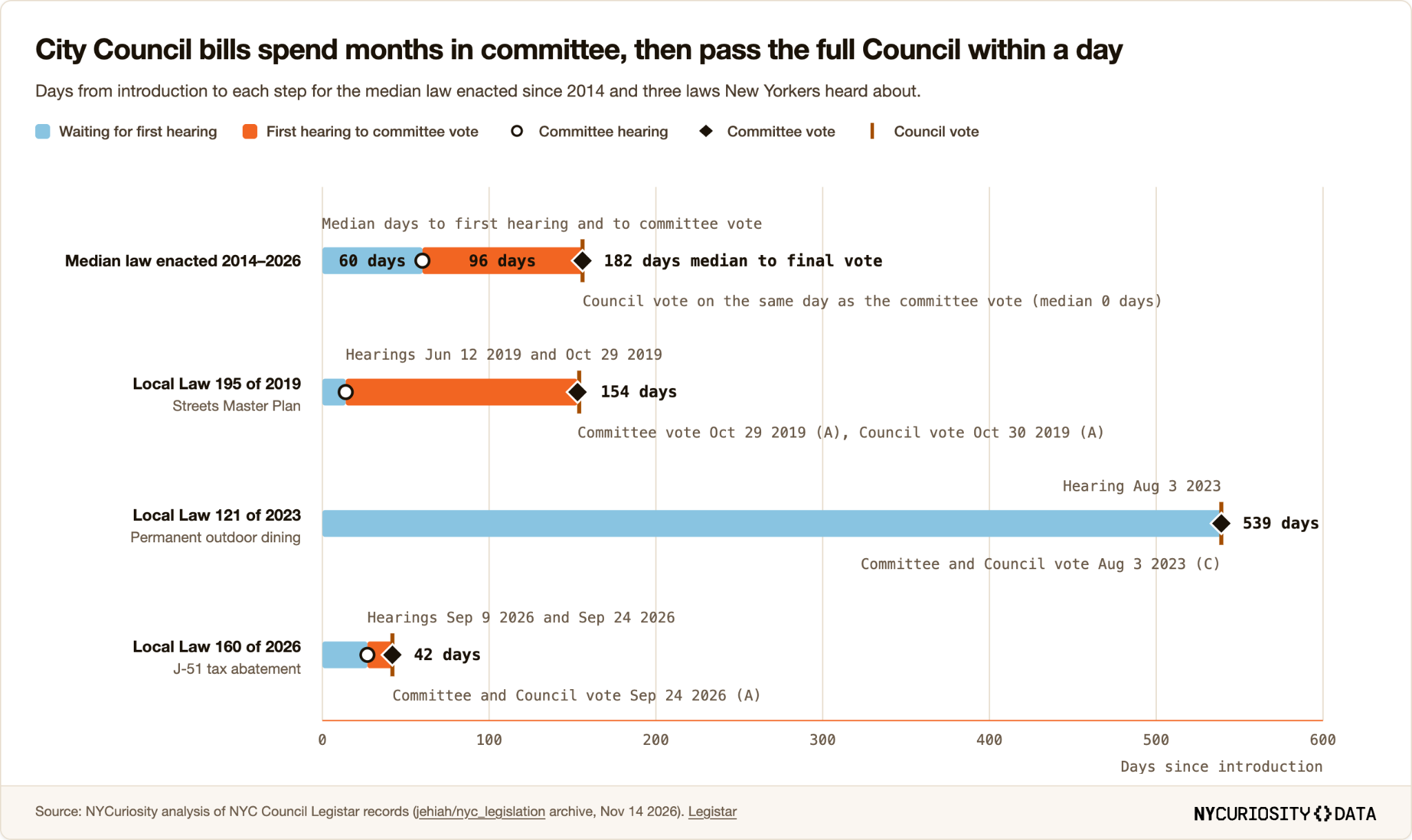
For example, take a look at the final votes in the New York City Council. Every one of the 2,225 bills that the Council brought to a final vote from January 2014 to November 14 2026 passed. Among the 1,913 votes with member-level records, 70% drew no “No” votes at all, and no bill drew as many No votes as Yes votes. While this extraordinarily high level of consensus is in part driven by one-party dominance of the Council and the power of the Council Speaker to set the legislative agenda, it is also representative of how the bills being voted on by the full Council have already been shaped and agreed to prior to the vote.
The Policy Entrepreneur’s Handbook
So for someone not currently “inside” the political system themselves (an elected or policymaker), what can be done to influence policy?
First, show up early to the process. That means attending committee meetings where legislation is still being shaped and playing an active part in the debate over that legislation. Doing so may require subscribing to your chamber of interest’s newsletter or procedural feed (see New York City Council’s legislative calendar here), as these bills are likely not being written about in the media yet.4 Besides community board, City Council, and State Legislature committee meetings, other “early” places to show up are agency rule comment periods and political advocacy events. Socially, these ideas bubble inside of group chats and organizations even earlier than that, and you can join these organizations and group chats!
Second, get to know the relevant electeds. (And that means getting comfortable with the term “electeds” instead of “elected officials,” which is the common parlance inside the political system). Learn which ones sit on committees that you care about. Get to know them, their platform and what they care about, and reach out to them directly. Whether that is over email, a call to their office, or a request to chat, bring a friendly and constructive demeanor to the interaction. Make your policy ideas and questions clear, but work with the policymaker; appreciate that they have constraints and opportunities that might not be visible to you. Simply making demands or acting in an adversarial manner is not likely to get them to listen or change their mind.
Third, be a public voice advocating for your issue. If you are newly joining the public conversation on a policy, prepare to bang the drum for months or years before you are heard. If you are not writing or talking publicly about the policies you desire, you are likely missing out on potential audiences that could be persuaded to agree with you. Advocating publicly for your policy preferences also has the benefit of increasing your reputation as an expert, or at least passionate supporter. Your ideas are sharpened against the public, and, if you stick with it, you will be surprised who might reach out to you (journalists, advocates, elected officials, staff, and more).
Fourth, join the social realm of staff, advocates, and other people who actively work on what you care about. Become “a regular.” This means going to happy hours and meetups, but it also means sending some DMs to get coffee with people who like your posts on social media. If you embrace the social nature of policymaking, which one would expect from the politics of a self-governing society, you’ll soon have a network of other advocates, experts at think tanks or academic institutions, agency staff, and more.
The number of people involved in shaping specific policies is often surprisingly small, and the more specific you get on a policy, the smaller that world becomes.
Be more than an advocate: be an expert!
If you’ve gotten this far in the post and think something like “But I still don’t know how to approach the system!” you are not alone. Most people, once they come to really care about a policy issue, feel like they’re facing either a stone wall or a fog. In either case, there is no visible path forward.
There are two solutions to this: you can find some issue-relevant advocacy groups to join by searching online. Ideally, they would be able to fill you in on an issue’s history and the contemporary state of its debate. They also provide a community of like-minded individuals. This works for a lot of people.
But if you want to do more, you need to apply effort to understand an issue in a way that most people do not.
The more informed you are on a policy, and the more familiar you are with its history and the conversation around it, the more you can offer to the policy discussion itself. The ideal end state here is being able to provide policymakers with the first draft of a bill or a specific policy memo delineating actions to take in order to achieve your desired change.5
At the end of the day, politics is about the relationships between people (see: who you know and who knows you). The more relationships you have formed with relevant actors, the more influence you will have. The more you advocate publicly for an issue, are present in the rooms where the issue is being discussed and shaped, and become associated with the issue, the more relationships you will form.
See the starlight while it’s still being emitted. Attend one committee meeting this month, follow legislative feeds to catch new bills early, go to political events, join clubs, and take civics classes to make new connections and grow your network.

In modern political science, this is the “multiple streams framework” from John Kingdon’s 1984 book Agendas, Alternatives, and Public Policies. It has been much elaborated upon and revised since then.
From J.S. Mill’s “The Claims of Labour” (1845) as printed in Essays on Economics and Society, University of Toronto Press (1967), page 370.
From J.S. Mill’s “The Claims of Labour” (1845) as printed in Essays on Economics and Society, University of Toronto Press (1967), pages 368-369.
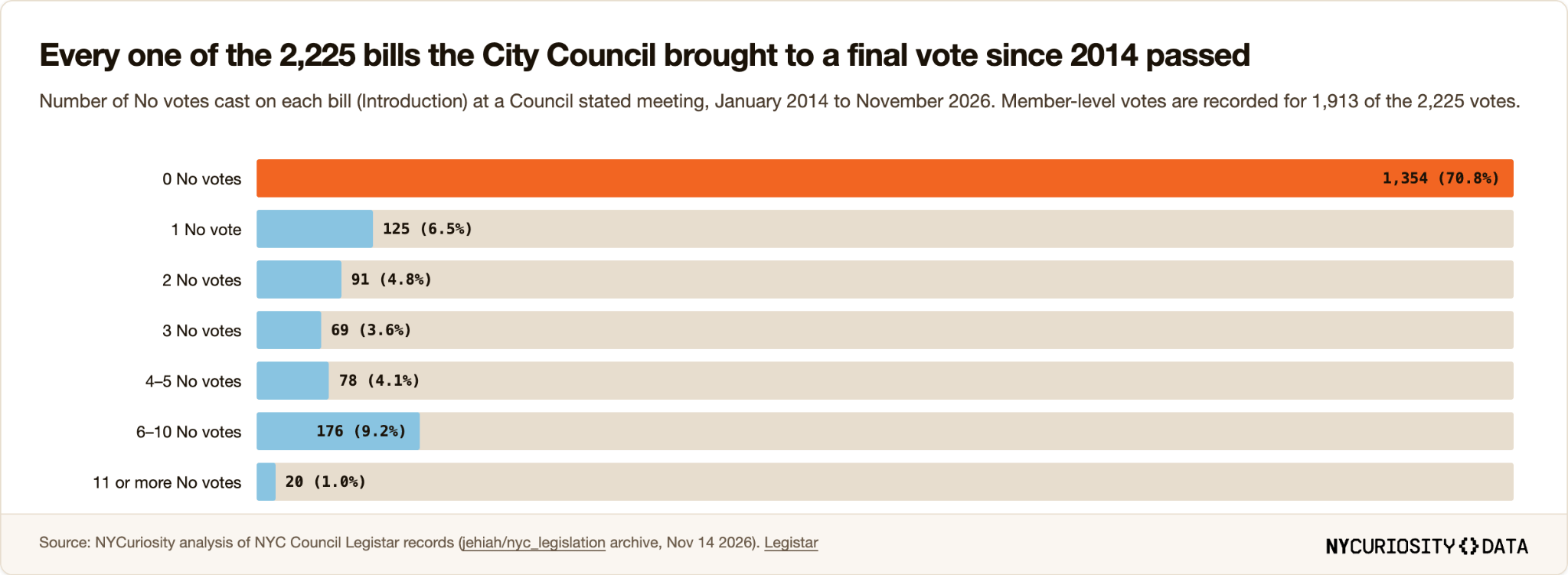
Most rewrites of legislation are negotiated between the bill sponsor's office, the committee counsel, and interested parties, either before or around the committee hearing. 90% of the 2,176 City Council laws enacted since 2014 were amended in committee before the committee vote actually occurred. So by the time a bill reaches the full Council, it has usually been rewritten at least once. That means committee meetings are a highly effective step of the policymaking process to insert yourself into.
Beyond the actual policy document, you usually need to be socially adept in a way that means, politically, people will want to follow it! But that’s a longer discussion.