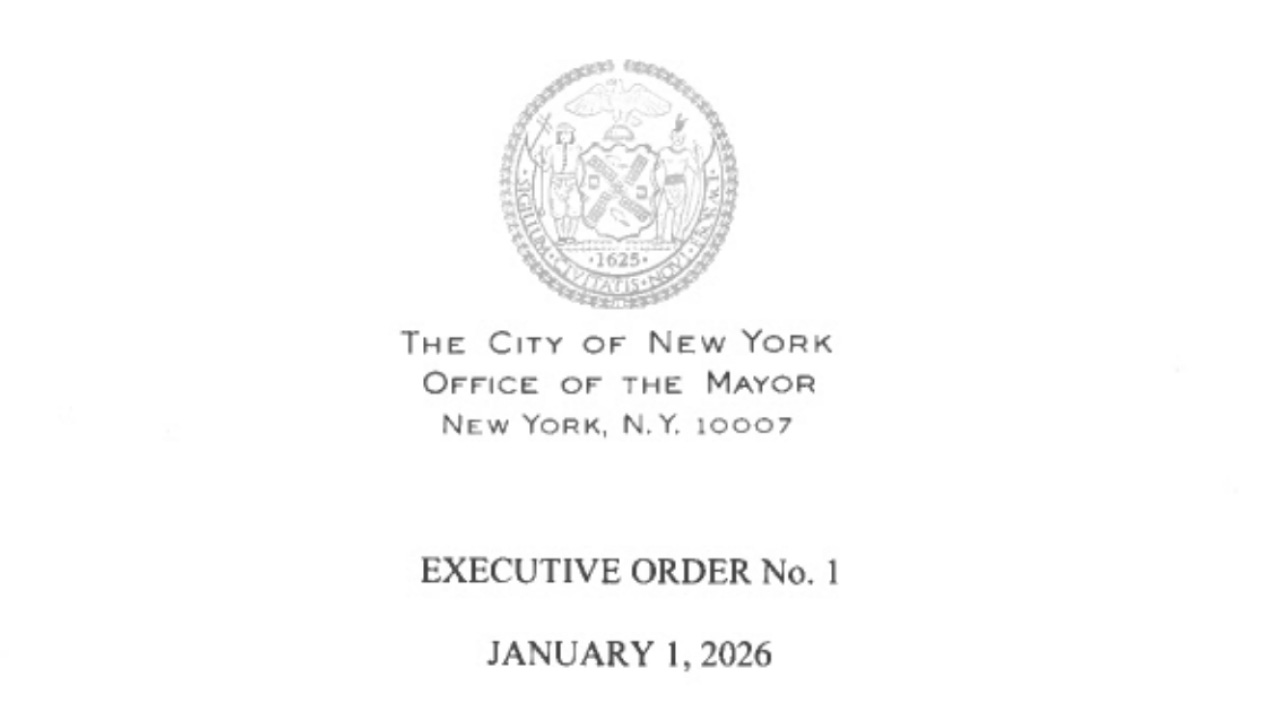
Zohran Mamdani became NYC’s mayor at midnight, January 1. And with a new mayor, just like with a new governor or president, comes a slew of executive orders. But what are “executive orders,” where can you find them, and how do you understand them?
What are mayoral executive orders?
Executive orders direct and govern the activity of government officials and agencies under the executive’s authority. In the case of New York City, that means the mayor issuing directions to members of his administration and city agencies. He cannot issue an executive order directing the activity of, for example, the city council or the governor.
The mayor has the power to issue these directions pursuant to law, including the city charter and state statute; you will find executive enabling authority for these orders up and down the hierarchy of authorities. The mayor does not have a blanket, nebulous authority to issue edicts.
Here are two examples of the law giving the mayor the authority to issue executive orders:
1) The city charter allows the mayor to delegate mayoral powers to another office holder, which can be done via executive order:
City Charter—Chapter 1 “Mayor”, section 8 “General Powers,” paragraph f (emphasis added): “Except as otherwise provided in section eleven, the mayor may, by executive order, at any time, create or abolish bureaus, divisions or positions within the executive office of the mayor as he or she may deem necessary to fulfill mayoral duties. The mayor may from time to time by executive order, delegate to or withdraw from any member of said office, specified functions, powers and duties, except the mayor's power to act on local laws or resolutions of the council, to act as a magistrate or to appoint or remove officials. Every such order shall be filed with the city clerk who shall forward them forthwith to the City Record for publication.”
Mayor Mamdani exercised this power with his second executive order, where he (for example) delegated power to his first deputy mayor, among others.
2) New York state statute allows local executives to declare states of emergency
NY State statute—Executive Law (EXC), section 24 “Local state of emergency; local emergency orders by chief executive” (emphasis added): “Notwithstanding any inconsistent provision of law, general or special, in the event of a disaster, rioting, catastrophe, or similar public emergency within the territorial limits of any county, city, town or village, or in the event of reasonable apprehension of immediate danger thereof, and upon a finding by the chief executive thereof that the public safety is imperiled thereby, such chief executive may proclaim a local state of emergency within any part or all of the territorial limits of such local government…”
Former Mayor Adams used this authority (and the common law authority of executives to secure the public welfare) to issue and renew an emergency declaration related to “…over two hundred thousand asylum seekers [that] have arrived in New York City from the Southern border without having any immediate plans for shelter.” See executive order 902, issued December 29, 2025.
You’ll also note that not all authorities that allow mayoral executive orders specifically use the phrase “executive order,” and New York State’s Executive Law above is one example of that.
Mayoral executive orders are limited in their power
Executive orders often make their “enabling authority” pretty clear, which also shows that they are reliant on law to be issued, not pure executive whim. For example, Adams EO 902 says this: “NOW, THEREFORE, pursuant to the powers vested in me by the laws of the State of New York and the City of New York, including but not limited to the New York Executive Law, the New York City Charter and the Administrative Code of the City of New York, and the common law authority to protect the public in the event of an emergency…”
Also, if you read further in the state executive law that I quoted above, you’ll find this:
Such proclamation shall remain in effect for a period not to exceed thirty days or until rescinded by the chief executive, whichever occurs first. The chief executive may issue additional proclamations to extend the state of emergency for additional periods not to exceed thirty days.
And:
The legislature may terminate by concurrent resolution, such emergency orders at any time.
Mayors can issue executive orders, but they are often defined in scope and operation by superseding state law.
Where can you find mayoral executive orders?
EOs must be posted to the city’s website, per section 3-113.1 of the city’s administrative code.
You can also find them in the City Record, which publishes the general activity of the government. (Just search “executive orders.”)
The theory of executive orders is fractal. If you get a grip on how they work with the mayor, you have a good idea of how they work for governors and the president too.
If you want to know more about presidential orders, you can read more about them here. They operate pretty similarly. You can find presidential EOs (and other executive actions) here.
If you want to know more about New York gubernatorial executive orders, you can read more about them here. You can find gubernatorial EOs here.
I highly encourage anyone to read the actual text of exectutive orders themselves. Commentators on the internet often say what’s in the EOs, and they are often just flat wrong. Look at them yourself!
Truth is the standard, getting things right matters when evaluating mayoral action
When people talk about “what the mayor is doing” or “what the president is doing,” one ought ask: “by which mechanism? Can you link me to it so I can read for myself?” People are sloppy and vague by default when discussing executive actions. We do not have to be; precision and truth are required to understand the political world and improve it.
I published “How to Evaluate the Mamdani Administration” earlier today, just after Mamdani was sworn in as mayor. In the piece, I stressed the need to get at the Truth. That begins by getting basic facts right, caring about precision, linking to original sources so that people can check what you say about them, and understanding the governmental mechanisms one comments upon.
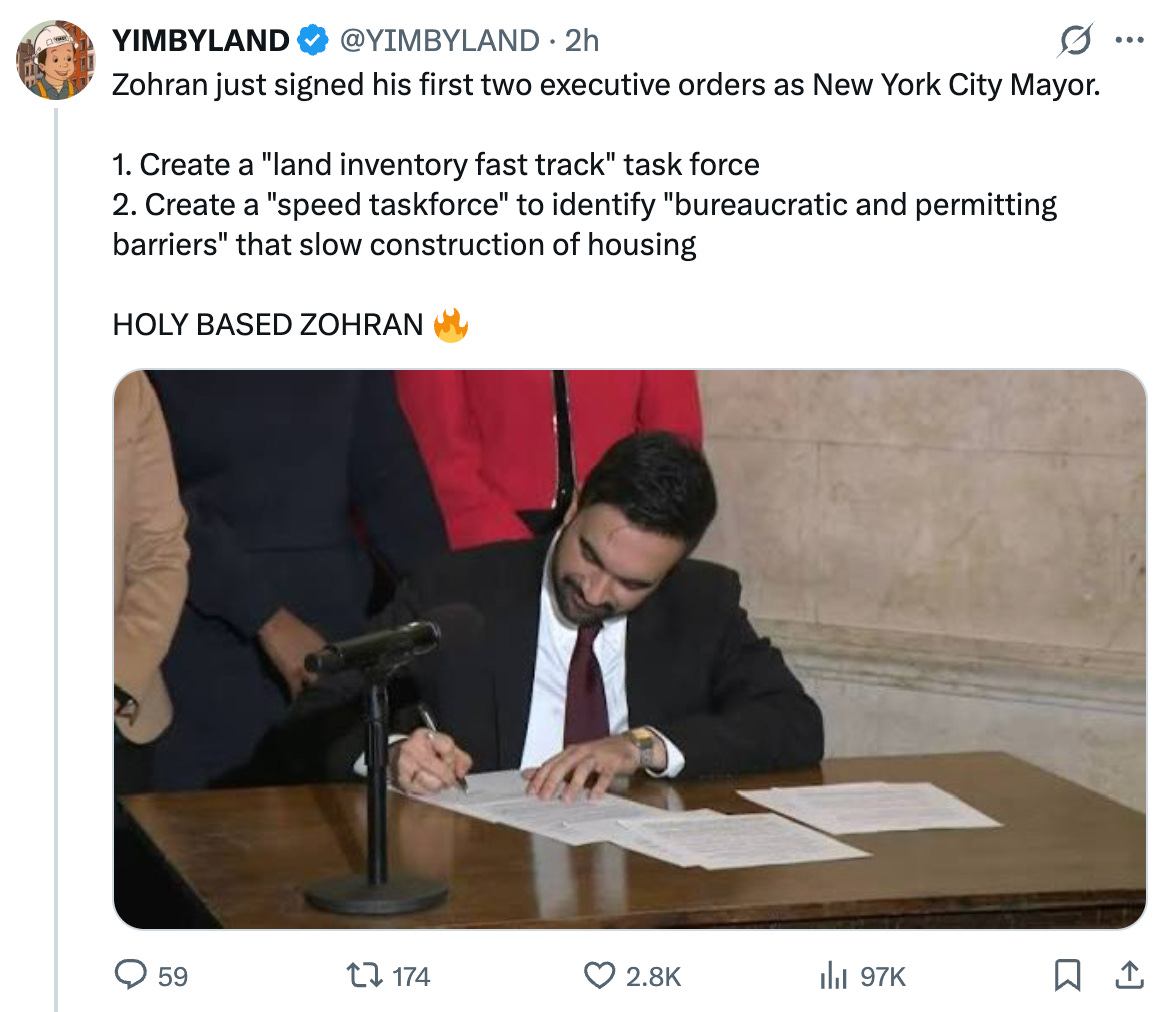
I don’t mean to pick on the X account pictured below, but they tripped out of the gate here. They stated, incorrectly, what Mayor Mamdani’s first two executive orders were, and didn’t link to anything:
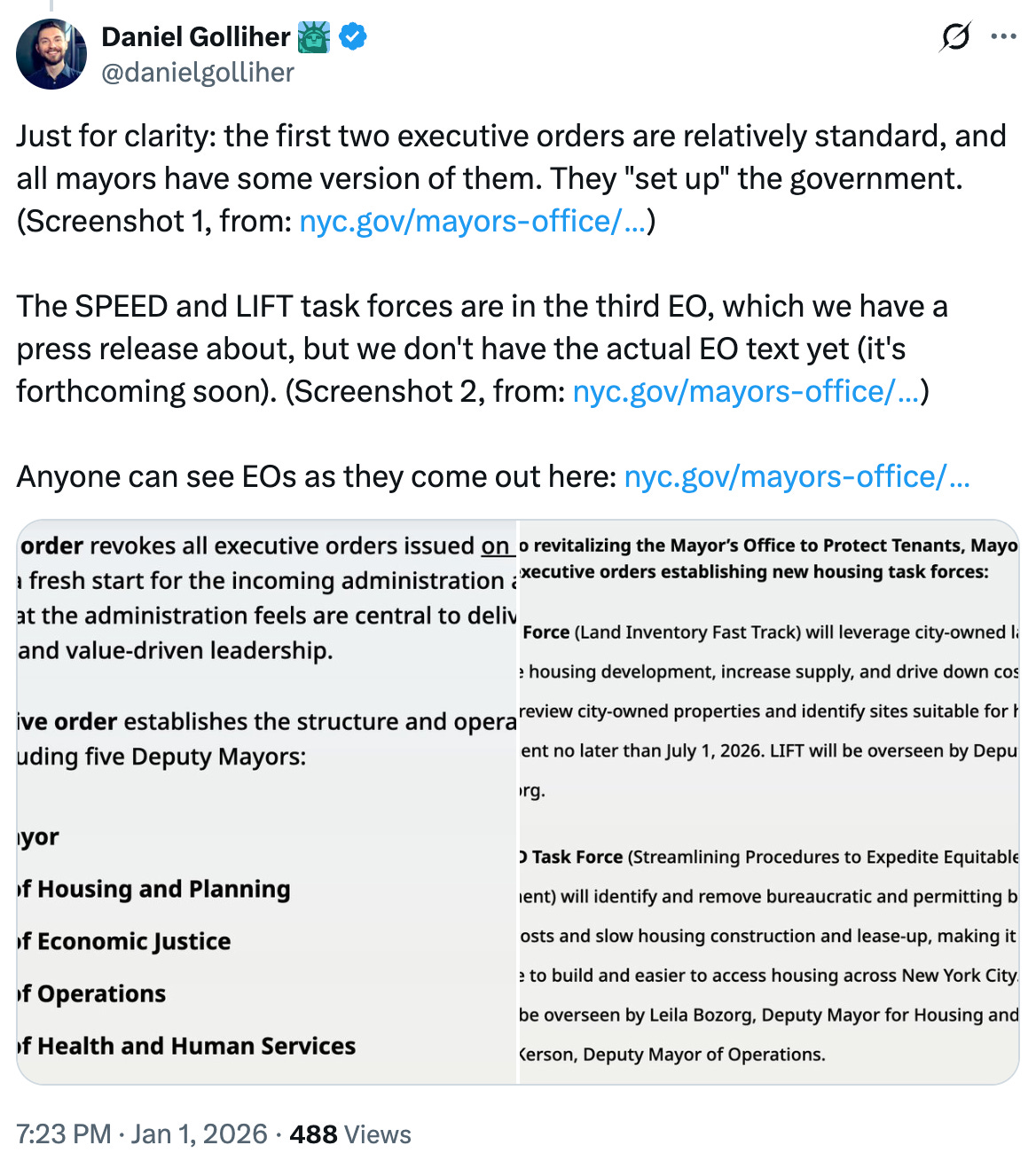
My response, which explained that those were not what his first executive orders said, and that they were contained in a third (and more, I should have added!) executive order that—as of this post—has not been formally released on the mayor’s site yet:
Good luck out there, friends!
We’re at the beginning of a new mayoral administration and a new city council. It’s an exciting time, and a turbulent time. Keep your eyes on facts, original documents, and intellectual proxies who do the same.