

This brief essay originally appeared as an article on X.
Generally speaking, the United States will require significantly evolved institutions in the 21st century. It will get them somewhere on a spectrum between “we were overcome by events” and “on purpose.” But it will happen, and is happening. America has had plenty of these moments before, where the old republic ceases to be, and a new (hopefully) republic is born.
But the best version of these institutions, more towards the “on purpose” end, will require capital-c Compromise. But I do not yet think enough people understand, really, what that word means in the context of architectonic institutional evolution. Or what it requires.
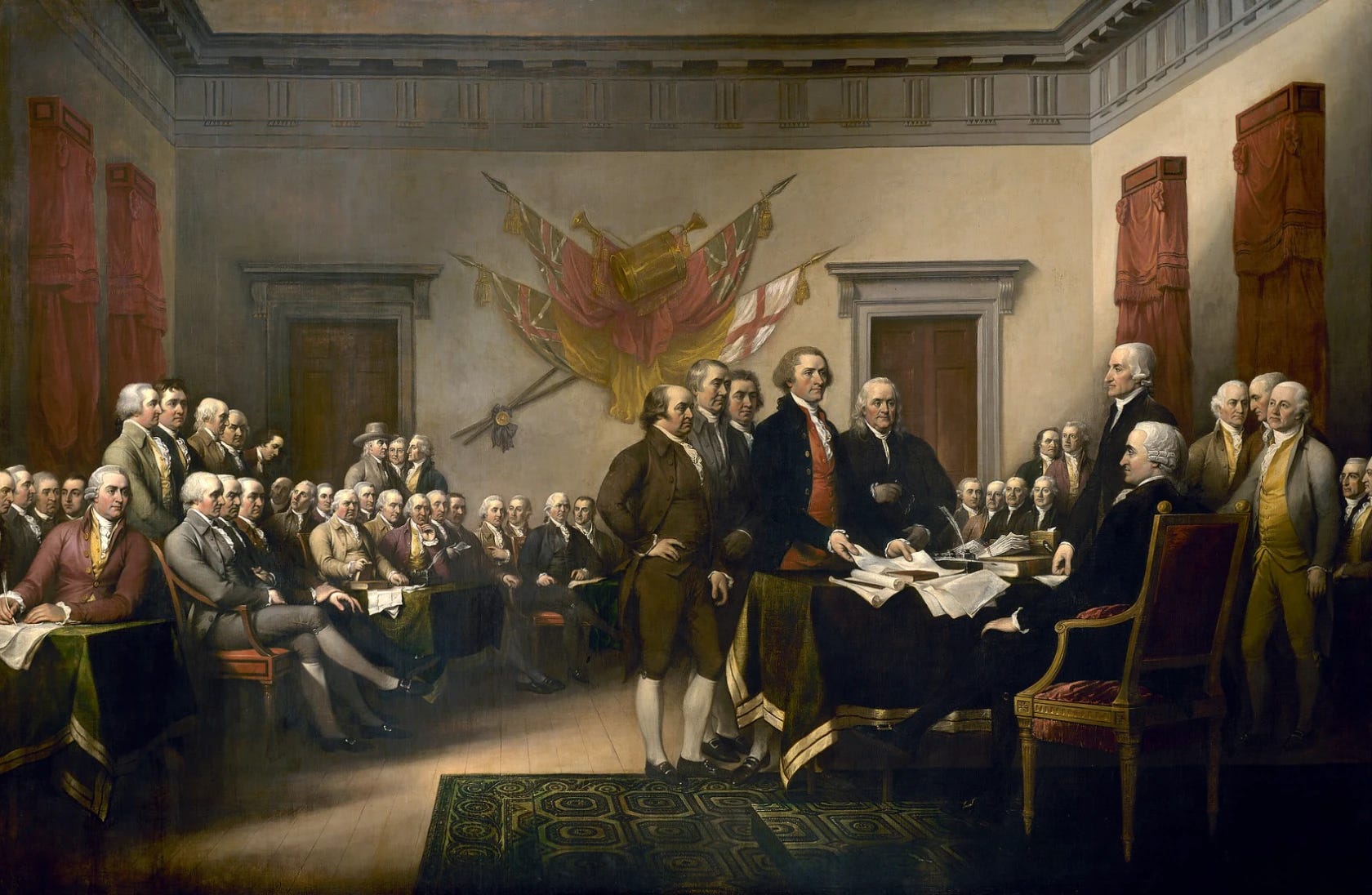
One of the things I’m working on is an institution of my own squarely dedicated to helping people across society appreciate—emotionally and practically—what this kind of compromise looks and feels like. This means fully understanding reality *on the ground* in Philadelphia in 1787 (it truly is not what most think; it was less certain, and astonishingly impressive on the scale of all human history), or in the aftermath of the Civil War, or at many other hinge points in American political history. You can find other worthwhile stories of grand Compromise in corporate histories too, including current companies like SpaceX.
Why tell these stories?
Because: Fundamentally, most people don’t appreciate the extent to which the American Founders (and Refounders) accepted a compromised vision of what they wanted. People radically underestimate how much the founders subordinated their own vision to a larger, compromised whole. Or what that felt like in the moment, as a participant and a commentator afterwards. Part of the skill of this kind of Compromise is a deep well of internal capacity to live with the compromise itself, and defend it against people who demand no trade-offs.
Regarding the need to Compromise, both the worlds of government and technology have failure modes: a strain of culture of Silicon Valley has acculturated people to full ownership of a vision at arbitrary scale. And also: the era of the influencer politician that sails through a low-turnout primary and a gerrymandered general election accomplishes the same thing—no willingness or skill to Compromise.
And the skill here is not “to compromise or not.” It is “compromise what, when, and why?” None of us is omnipotent on the scale of America (or New York). Compromise will happen with or without us.
Compromise means many things to many people. Some people think of it purely in terms of its downsides. “The structural integrity is compromised, evacuate now.” That is one way of thinking of it, but this means “to compromise to a deadly fault.” Here I’m talking about Francis Bacon’s injunction in Novum Organum (1620) that “Nature, to be commanded, must be obeyed.”1 Sheer will always finds a constraint, but all creativity is born of that. Necessity is the mother of invention—when your back is against the hard wall of reality. All great art is a compromise between the artist and the realities of their medium. All great technology is an iterative game between our constrained understanding of reality and reality itself. You cannot force stone to do just anything. You cannot command paint to blend just any way. You cannot demand a rocket that simply goes up when and how you like. But you can still achieve the greatest things done and discovered by humanity nonetheless.
Compromise, in this sense, is a deal that we strike with fundamental constraint to achieve greatness nonetheless. It is something to live up to, not to resignedly accept. It is one of humanity’s greatest abilities.
All human greatness is the product of the extent of our abilities melding with the constraints of physical reality and human society. I am not the least bit deterred or upset about this. It is simply reality, and how wonderful that we can rise as high as we’ve risen despite our imperfect abilities and understandings.
“Now the empire of man over things is founded on the arts and sciences alone, for nature is only to be commanded by obeying her.” https://www.gutenberg.org/cache/epub/45988/pg45988-images.html